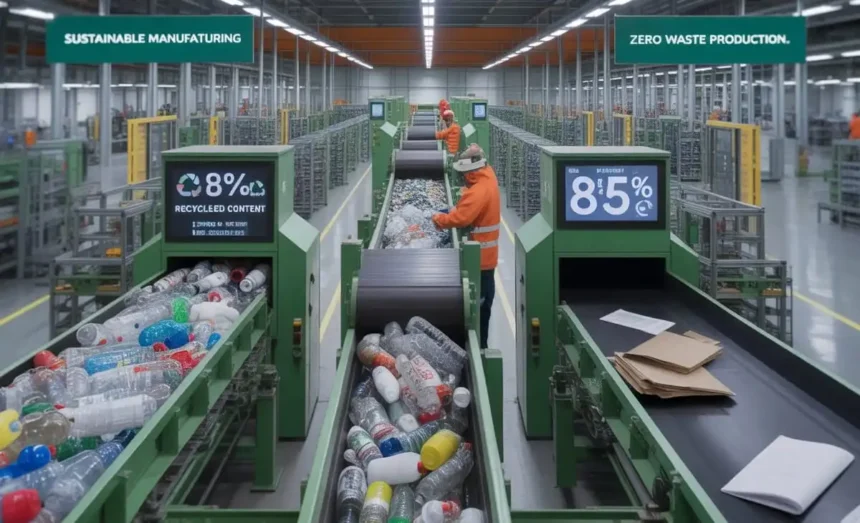
Industries around the world are under growing pressure to adopt sustainable practices. Climate change, limited natural resources, and rising consumer awareness are pushing companies to rethink how products are made. One concept that has become increasingly important in this transition is Recyclatanteil, which refers to the proportion of recycled materials used in manufacturing.
Understanding Recyclatanteil is not only about meeting environmental regulations. It represents a shift in how industries approach resource management, waste reduction, and long-term sustainability. By incorporating recycled materials into production, manufacturers can significantly reduce their dependence on virgin resources while lowering environmental impact.
For businesses, this concept also brings opportunities. Consumers today prefer brands that demonstrate environmental responsibility. Increasing recycled content in products can therefore improve both sustainability performance and brand reputation. As industries continue to evolve, understanding how recyclate content works—and how to implement it effectively—has become essential for modern manufacturing.
Understanding the Concept of Recyclatanteil
The term Recyclatanteil refers to the percentage of recycled materials used during the production of goods. Instead of relying entirely on newly extracted raw materials, manufacturers integrate materials that have already been used, processed, and recycled.
This approach plays a major role in circular economy models. A circular economy focuses on reusing resources as long as possible instead of discarding them after a single use. By incorporating recycled materials back into production cycles, industries can minimize waste and extend the life of valuable resources.
Manufacturers track this percentage to evaluate how sustainable their production processes are. A higher recyclate content often indicates that a company is actively working to reduce environmental impact. Many governments and environmental organizations now encourage or require businesses to report recyclate percentages to ensure transparency and accountability.
The Environmental Impact of Increasing Recyclatanteil
Increasing the recyclate content in manufacturing has a direct impact on environmental sustainability. When companies use recycled materials, they reduce the need to extract raw resources such as metals, plastics, and minerals. Resource extraction often requires significant energy and can cause environmental damage.
Another major advantage is the reduction of greenhouse gas emissions. Processing recycled materials generally consumes less energy compared to producing materials from raw resources. This reduction in energy use helps lower overall carbon emissions during production.
Waste reduction is also a key benefit. Products that would otherwise end up in landfills can be recycled and reused as raw materials. This prevents unnecessary waste accumulation and contributes to more efficient resource management.
By increasing recyclate content, companies not only protect the environment but also demonstrate responsibility toward future generations.
Key Benefits of Recyclatanteil for Businesses
Companies adopting sustainable practices often discover that recyclate content provides several business advantages beyond environmental benefits.
Important benefits include:
- Lower material costs when recycled materials are more affordable than virgin resources
- Improved brand reputation among environmentally conscious consumers
- Compliance with environmental regulations and sustainability standards
- Reduced waste management expenses through material reuse
- Innovation opportunities in product design and material technology
These benefits demonstrate why sustainability is increasingly viewed as a business strategy rather than simply an environmental responsibility. Companies that embrace recyclate integration often gain a competitive advantage in markets where consumers value eco-friendly products.
Measuring Recyclatanteil in Manufacturing Processes
To improve recyclate content, companies must first measure their current usage of recycled materials. Accurate measurement allows businesses to understand where improvements are possible and track progress over time.
Manufacturers usually begin by analyzing the materials used in their production processes. This includes identifying which components contain recycled materials and calculating their proportion within the final product. Material tracking systems and inventory management software often assist in this process.
Establishing clear benchmarks is also important. Businesses may set targets to increase recyclate percentages gradually over several years. Regular monitoring helps ensure that these targets remain realistic and achievable.
By maintaining detailed records of material sources and recycling rates, companies can provide transparent sustainability reports and demonstrate accountability to regulators and customers.
Common Misconceptions About Recyclatanteil
Despite its growing importance, several misconceptions surround the concept of recyclate content. One of the most common myths is that products made with recycled materials are automatically lower in quality. In reality, modern recycling technologies have improved significantly, allowing recycled materials to match the performance of virgin materials.
Another misunderstanding involves cost. Some businesses believe that integrating recycled materials will increase production expenses. However, many industries have discovered that recycled materials can actually reduce costs when managed efficiently.
There is also a misconception that recyclate integration is only relevant for specific industries such as packaging or plastics. In truth, almost every sector—from construction to electronics—can benefit from incorporating recycled materials into production.
Addressing these misconceptions is important for encouraging wider adoption of sustainable manufacturing practices.
Real Case Study: Manufacturing Industry Success
A European packaging company provides an excellent example of how recyclate content can transform production processes. Several years ago, the company faced increasing pressure from regulators and consumers to reduce its environmental impact.
Instead of making minor adjustments, the company committed to increasing the recyclate content in its packaging materials. Engineers redesigned their production processes to incorporate higher percentages of recycled plastics while maintaining product durability.
Within three years, the company successfully increased recycled content to more than 50 percent in several product lines. Energy consumption decreased, waste production dropped significantly, and customer trust improved.
The initiative also attracted partnerships with retailers looking for sustainable packaging solutions. This case study shows that environmental responsibility and business success can work together.
Strategies to Increase Recyclatanteil in Production
Companies interested in increasing recyclate content must develop clear strategies that integrate sustainability into their operational planning.
Effective approaches include:
- Partnering with recycling suppliers to secure consistent sources of high-quality recycled materials
- Investing in modern recycling technologies that improve material quality
- Redesigning products so they can incorporate recycled components more easily
- Training employees to understand sustainable production practices
- Collaborating with research institutions to develop innovative recycling methods
These strategies help companies gradually transition toward more sustainable production models. The process may take time, but long-term benefits often justify the investment.
Challenges When Implementing Recyclatanteil
Although the benefits are clear, integrating recycled materials into manufacturing processes can present challenges. One of the main issues involves material consistency. Recycled materials sometimes vary in quality depending on their source.
Another challenge relates to supply chain management. Businesses must ensure a reliable supply of recycled materials to maintain production efficiency. Without stable suppliers, production schedules may be disrupted.
Regulatory requirements can also complicate implementation. Different regions may have varying standards regarding recycled material usage, which manufacturers must carefully follow.
Despite these obstacles, technological advancements and improved recycling infrastructure are helping industries overcome many of these challenges.
The Future of Sustainable Manufacturing
Sustainable manufacturing is expected to become even more important in the coming decades. Governments are introducing stricter environmental regulations, and consumers increasingly demand responsible production practices.
Innovations in recycling technology are already improving the quality and availability of recycled materials. Advanced sorting systems, chemical recycling methods, and digital material tracking tools are transforming how resources are managed.
Businesses that adopt sustainable practices early will likely benefit the most. Integrating recycled materials into products today prepares companies for future regulations and market expectations.
In this evolving landscape, recyclate content will remain a key indicator of environmental responsibility within manufacturing industries.
Conclusion
Sustainable production is no longer optional for modern industries. Companies must find ways to reduce environmental impact while maintaining efficiency and competitiveness. Recyclatanteil provides a practical and measurable way to achieve these goals.
By increasing Recyclatanteil in manufacturing processes, businesses can reduce waste, conserve natural resources, and improve their environmental performance. At the same time, they strengthen their reputation among consumers who value sustainable products.
As recycling technologies continue improving and environmental awareness grows, integrating recycled materials into production will become even more essential. Companies that embrace this approach today will play a major role in shaping a more responsible and sustainable industrial future.
FAQs
- What does Recyclatanteil mean?
Recyclatanteil refers to the percentage of recycled materials used in a product or manufacturing process. - Why is recyclate content important for sustainability?
It reduces the need for new raw materials and lowers energy consumption, helping decrease environmental impact. - Can recycled materials maintain product quality?
Yes. Modern recycling technologies allow many recycled materials to perform as well as virgin materials. - How can companies increase recyclate content?
By sourcing recycled materials, improving recycling technologies, and redesigning products to include sustainable components. - Which industries benefit most from recyclate integration?
Industries such as packaging, automotive, construction, and electronics can significantly benefit from higher recyclate usage.